HEAT NETWORKS - A NEW INFRASTRUCTURE learning from the past
What can we learn from electricity networks?
What can we learn from electricity networks?
What can we learn from electricity networks?

Since 19th Century the emergence of the national grid electricity network offers valuable lessons that the heat sector can benefit from.
The legacy of other infrastructure
What can we learn from electricity networks?
What can we learn from electricity networks?
There is so much to learn from historical infrastructure. Infrastructures are as old as the 4.5bn years that the planet has been supporting and evolving life. In terms of human intervention it can be defined as "the connection of people with the natural and physical environment". We can learn so much from the development of road, rail, canals, water and wastewater, power systems.
Learning from Evolution of Electricity Networks
UK Electricity Networks and Parallels with Heat
The emergence of the national grid electricity network offers some valuable lessons for the heat sector. Notably the early emergence of a series of disconnected independent systems that were later connected into a national network requiring significant corporate restructuring and technological refurbishment. Heat network have an opportunity to be designed so that there are common standards that don't require reinvention later.
The discovery of electricity in the 18th Century opened the door to scientific research that could eventually make power available universally. In 1752, Benjamin Franklin demonstrated the electrical nature of lightning with his kite experiment. In the late 18th century, Italian scientist Alessandro Volta invented the voltaic pile, the first chemical battery capable of generating a steady electric current. Later, in 1821, Michael Faraday’s work on electromagnetic rotation laid the foundation for electric motors, and in 1831, he discovered electromagnetic induction, leading to the development of generators.
These scientific advances encouraged further research and innovation, gradually transforming electricity from a scientific curiosity into a practical resource for society. It took until 1882 for the Electricity Lighting Act to be enacted. This was the first major piece of legislation to regulate the generation and supply of electricity in the UK. It enabled electricity undertakings to operate, set out licensing arrangements, and allowed local authorities to purchase electricity undertakings after a defined period. Several key milestones paved the way for this historic legislation.
By the late 1870s, enthusiasm for electric lighting far outpaced the legal framework needed to support it. In 1878 alone, 34 private bills were promoted in Parliament by local authorities and companies seeking powers to generate electricity and break up streets to lay cables (Lime Park Heritage Trust, n.d.).
A turning point came in 1881, when Godalming, Surrey, became the first town in the UK to receive a public electricity supply, powered by a waterwheel on the River Wey. While modest, this scheme demonstrated that public electricity supply was technically feasible but exposed the absence of a general statutory framework. At this stage, each new scheme required an expensive and time-consuming private Act of Parliament, an arrangement that was clearly unsustainable.
The cumulative impact of these developments fostered the environment necessary for the Electricity Lighting Act, which would establish the framework for widespread distribution and regulation of electrical power.
Following the enactment of the Electricity Lighting Act in the late 19th and early 20th centuries, a multitude of independent undertakings sprang up across the United Kingdom. These were often municipal authorities or private companies, each responsible for generating and distributing electricity within their own localities. The absence of a unified regulatory framework meant that these undertakings developed their own systems, leading to a patchwork of infrastructure across the nation.
This lack of standardisation resulted in significant negative consequences that would present challenges in the 1920’s. Firstly, there were marked differences in frequency and voltage from one region to another, making it technically challenging to interconnect systems or transfer electricity between areas. For example, some undertakings operated at 50 Hz while others used 40 Hz or 60 Hz, and voltage levels varied widely. Some systems operated at DC and some at AC.
Moreover, disparities extended beyond technical aspects. Undertakings were not compelled to supply every customer and so cherry-picking was common. Customer service standards and commercial principles differed greatly, with some providers focusing on public service while others prioritised profit, resulting in inconsistent reliability, pricing, and consumer experience. The resulting fragmentation meant that the process of integrating these disparate systems into a single national grid was fraught with difficulties, requiring extensive technical adjustments and complex negotiations to harmonise operational practices and service expectations nationwide.
The Electricity (Supply) Act 1926 created a significant change in the supply of electricity and established the Central Electricity Board (CEB) and leading to the development of the national grid. The Commercial interests of some Local Authorities and many of the private undertakings were opposed to the nationalisation and centralisation of electricity supply. Graeme Haldane, who published a semi-anonymous book under the initials G.H. about the socialisation of the electrical supply industry (Haldane, 1934), and at the time was employed at Merz and McLellan. In Haldane’s memoir he recalls that this book caused, “extreme annoyance to certain of the electricity companies. One of these was the County of London Electric Supply Company who were important clients of Merz and McLellan. By employing a private enquiry agency it did not take long for the Chairman to discover who “G.H.” was and he then descended on Charles Merz and indicated that either Merz and McLellan rid themselves of dangerous extremists like G.H. or the firm ceased to be consultants to the company. By a masterly piece of diplomacy Merz managed to reach a compromise by arranging the production of a “counterblast” to my book together with an undertaking from me to consult fully with the firm about any further publication.”
In Haldane’s book he discusses the transfer of ownership of these independent undertakings. At the beginning of 1932 the outstanding loans on local authority undertakings was £130M and the total of share, debenture and, loan capital on the company undertakings was £125M. The total capital expenditure on electricity supply up to the beginning of 1932 was £381M which in today’s terms is around £23.3bn based on Bank of England inflation calculator. The preferred route for CEB to transfer in the public undertakings was basically to take on the ownership and management of the assets and the outstanding debt risk. The market value of the company undertakings stock was around £200M. The preferred method of acquiring these shares was through the issue of a bond by the CEB secured by the revenue from the supply industry of the country. The reality was significantly more complicated, but this provides a brief summary of some aspects of the transfer of ownership considered at the time.
It is worth questioning whether there would have been a more effective solution if, with the benefit of hindsight, a system more like the 1926 Act and the establishment of the CEB, had been established in the 1880s. In the context of heat networks the situation today shares parallels with the electricity sector in 1880s and so is timely to call out risks of misdirected investment.
The Scottish Highlands were somewhat an exception to the emergence of electricity networks across the UK because of their lower population density, remote and challenging landscape. As such electricity supply to the North of Scotland developed differently. SSE Heritage published a very interesting book on the subject in The Highland Grid (Young, 2025). This explores the key political players and individuals that brought the North of Scotland Hydroelectric Board (NOSHEB) into existence. The long-term consequence that is impacting today is the transmission constraint at the so-called B6 boundary[1], which demarcates the flow of electricity between the Highlands and the central belt of Scotland, and onward to England. This boundary essentially represents the interface between the northern transmission system—covering much of the Highlands—and the southern system, which includes the central belt and extends into England and Wales. It represents a constraint to the flow of electricity from wind generators in the north of Scotland that results in these generators being compensated for turning off when the power cannot be transmitted south.
From nationalisation in 1948 until 1990, the electricity system in England and Wales operated as a vertically integrated public monopoly. Generation and transmission were controlled by the Central Electricity Generating Board (CEGB). Distribution and supply were handled by 12 Area Electricity Boards. Investment, planning, dispatch, and system reliability were managed centrally. This structure was formalised by the Electricity Acts of 1947 and 1957, which created the CEGB and the Electricity Council. The system delivered high reliability but was increasingly criticised during the 1970s–80s as capital‑intensive, inflexible, over‑reliant on coal and nuclear, and politically insulated from cost discipline.
The election of Margaret Thatcher’s Conservative government in 1979 marked a decisive break with post‑war energy policy. Electricity privatisation formed part of a wider programme that had already included British Telecom (1984) and British Gas (1986). Government objectives were to: reduce public borrowing; introduce competition where possible; transfer commercial and construction risk to the private sector; and convert monopoly utilities into regulated markets.
Electricity posed the greatest challenge because of its natural monopoly networks and real‑time system operation requirements. The solution was structural unbundling rather than simple sale. The statutory foundation for privatisation came in the form of the Electricity Act 1989. It abolished the CEGB, Electricity Council, and Area Boards; created licensed private companies for generation, transmission, distribution, and supply; established an independent regulator (OFFER, now Ofgem); introduced third‑party access and market entry for generators; and enabled transfer (“vesting”) of assets into successor companies.
This Act explicitly repealed the entire body of electricity legislation dating back to 1882, completing a full institutional reset. The CEGB was dismantled and split into four successor organisations: National Power were responsible for the majority of fossil‑fuel plant. PowerGen were responsible for the remaining fossil‑fuel plant. Nuclear Electric took on responsibility for the nuclear fleet (retained temporarily in public ownership). National Grid Company plc became the owner and operator of the high‑voltage transmission system. National Grid was initially owned by the 12 Regional Electricity Companies (RECs) and later floated on the London Stock Exchange in 1995. During this period of privatisation NOSHEB was transformed into a commercial entity. It became Scottish Hydro-Electric plc, which was subsequently merged with Southern Electric plc in 1998 to form Scottish and Southern Energy (SSE).
Alongside CEGB restructuring the 12 Area Electricity Boards became Regional Electricity Companies (RECs). These RECs owned the local distribution network and the retail supply business. They were floated on the stock market in late 1990.
The market evolved after privatisation with changes to generation, transmission and distribution. Independent power producers entered the generation sector including the introduction of combined cycle gas turbine (CCGT) technology. There was a decline of coal and restructuring of nuclear ownership. National Power and PowerGen were eventually broken up and sold to international utilities.
National Grid was retained as a privately owned regulated monopoly for the transmission network in England while in Scotland the transmission network is split into the north, owned by SSE Networks and south (including the central belt) by Scottish Power Energy Networks. Revenues of these private monopolies are set via price controls (RPI‑X and later RIIO models).
Full retail competition was introduced by 1999 and the multiple suppliers have emerged to compete with the original 12 companies. Wholesale electricity price volatility combined with competition has resulted in a number of supplier failures. Electricity suppliers are today competing for customers by offering fixed prices or flexible pricing and incentives to invest in renewables to reduce demand.
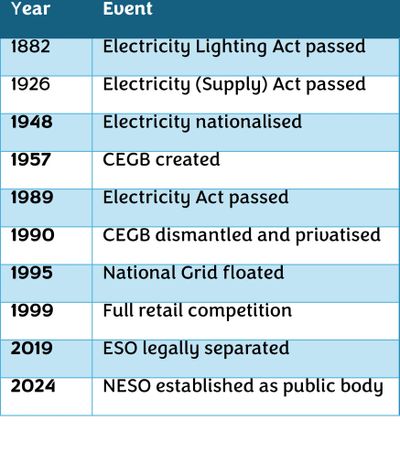
Figure 2illustrates the key historical milestones that are discussed above associated with the evolution of UK electricity networks. The figure also shows the generation mix over the same period. The electricity networks have relied predominantly on centralised generation of coal, nuclear and gas until around 2010 when the electricity network has had to react rapidly to a significant volume of decentralised generation from wind and solar. The key changes since 1920 in the supply mix arise from various technological innovations such as nuclear, policy objectives relating to energy security and most recently decarbonisation policy objectives.
The climate crisis and shift to renewables changed the electricity network and the unbundled privatised system meant that system coordination was fragmented. To manage whole‑system stability National Grid ESO was made legally separate in 2019 and in October 2024, its functions transferred to the National Energy System Operator (NESO). NESO is now a public corporation, responsible for whole‑system planning across electricity and gas. This marks a significant reversal of earlier assumptions that system coordination could remain within private ownership.
NESO is now wrestling with a more decentralised energy system and significant changes to generation and demand. Renewable electricity generation is changing the timing and magnitude of available generation and the nature of demand is shifting with the addition of electrified heating, electric vehicles and potentially data centres.
What is clear from the history of the electricity supply industry is that a binary choice between public and private ownership is too simplistic. The system needs the innovation and commercial acumen of the private sector and the control, convening power and customer protection that the public sector can bring. It also needs to realise the economy of scale that comes from bringing expertise and knowledge together to employ capital.
Heat Networks - the next National Infrastructure
History Lessons from Other Infrastructure
There is so much to learn from other historical infrastructure and a wealth of literature setting out how each was conceived, emerged, evolved, and in some cases reimagined. Infrastructure, not the man-made version, is as old as the 4.5bn years that the planet has been supporting and evolving life. The Institution of Civil Engineers chooses to define infrastructure in terms of human intervention, as the connection of people with the natural and physical environment. The Institution states that it is made up of systems that provide communities with modern and inclusive places that people are proud to live, work and play in. A wider description of infrastructure might include the environment that supports all life on earth (and probably other planets).
The evolution of man-made infrastructure is innately tied to challenges and opportunities that have faced decision makers throughout history. It has evolved through influences at local and global levels. Solutions are shaped by the environment, physical geography and the needs of society. The ability to invest and maintain these infrastructures have been bound by the economic circumstances prevailing at the time.
Industrial revolutions
Throughout history industrial revolutions have occurred in waves of innovation. Dorothy Neufeld, in an article for the World Economic Forum, helpfully explained these waves (Neufield, 2021). She illustrated a timeline using the theory of Joseph Schumpeter, who coined the theory of “creative destruction” in 1942, which suggests that business cycles occur in long waves of innovation. The ability to tap into abundant sources of energy and create technologies that employ these to fuel the innovation is a theme in every one of these waves.
Reflecting on the 5 previous waves it is possible to observe the benefits, and the damage, they did to the environment, society and economy. Currently we are living through the sixth wave, and do not have the benefit of seeing the outcome and explaining it with hindsight. Part of this sixth wave is the essential shift to secure life on the planet in the face of climate change, but without the benefit of hindsight, society is yet to universally accept the economic necessity of this.
This timeline, as presented by Neufield, started in 1785. It suggests that each of these waves have taken place over shorter periods of time. Neufield described the 60 years of the first industrial revolution as the harnessing of waterpower that enabled the industrialisation of textile and iron. In the second wave steam power, with Newcomen and Watt evolving the steam pump, opened up access to the vast reserves of coal under the UK. Coking coal created the fuel for Steel production driving innovation in manufacture and buildings. The combination of steel and coal led to Stevenson’s further evolution of the steam engine and the expansion of rail infrastructure.
Electricity, chemicals and the internal combustion engine characterised the third wave including Ford’s automation of the production line. The fourth wave initiated a globalised world through wide access to aviation as well as innovation in petrochemicals and electronics. This evolution to globalisation was enabled in the fifth wave as digitalisation, software and new forms media opened up digital connectivity. This fifth wave occurred between 1990 and 2020.
The sixth wave is considered to have started around 2020 and characterised by artificial intelligence, internet of things, robots and drones and clean tech.
Denmark has one of the greatest penetrations of heat networks in the world. It is worth observing the parallel history that took place compared to the UK. When the UK went through the industrial revolution Denmark experienced an agricultural revolution. This concept was once observed to me by a colleague, on a visit to a huge anaerobic digestion facility processing animal waste. This established animal husbandry in Denmark, which raises questions of animal welfare that I will not dwell on here, and continues on an industrial scale. That has opened up opportunities for sector coupling notably in the case of my visit, because animals were reared indoors, enabling the collection of slurry and centralisation of its treatment. Anaerobic digestion combines the treatment of agricultural waste with the production of biogas that is a direct replacement for natural gas. Multiple sites produce biogas that is supplied to the municipal district heating company who efficiently produce heat and power for the local community.
Nature
Nature is not always considered as infrastructure segment. However it plays a critical role in establishing balance the human interventions and commercialisation of nature-based solutions like peatland restoration and re-wilding. The natural biosphere working in harmony with geomorphological changes is a wonder that beats the best man-made infrastructure solutions. In order for life to continue to exist the evolution of species has had to react and balance the physical changes that have occurred on earth over billions of years. The natural environment has created vast energy stores in the form of a hot core, fossil fuels and radiactive rocks and receives plentiful energy in the form of radiated heat from the sun. Along with the Earth’s ability to support a stable atmosphere, mother nature manages some of the greatest infrastructures that exist.
As the earth has evolved, and it interacts with the sun and other planets in our galaxy, this stable temperature and atmosphere have protected and nurtured life. There have been perturbations in the physical, environmental and ecological systems. These perturbations have enabled life to exist and evolve but have also resulted in mass extinctions. The Theory of Evolution has explained how flora and fauna have been able to respond to changes in the physical and chemical make up of the planet.
But evolution benefits from multiple-generations. In the last 300 years these physical changes have been influenced more greatly by human intervention. Humans have tried to control these forces of nature. However humans can never fully predict and control all of these natural forces while maintaining the balance in physical, environmental and ecological systems.
Agriculture
The history of agriculture in the UK (Wibberley, 2004) and its influence on the landscape can be traced to early prehistoric activity including in Wiltshire around Stonehenge. The evolution of agriculture has always provided an economic and social purpose. Roman, Danish and Saxon influences brought the concepts of crop rotation and strip farming to drive productivity and efficiency.
Agriculture in the UK has long reflected issues of equality and social justice. From the manorial system where landlords held power over serfs and freemen, to later wage controls and labour disputes that fuelled events like the Peasants’ Revolt, social divisions were stark. Over time, policies and market changes have continued to impact farmers’ livelihoods, with many still facing financial pressures and declining incomes.
Farming has seen significant innovation, from crop rotation and tools like Jethro Tull’s seed drill to advances in education and scientific research. Mechanisation and new technologies have steadily improved efficiency, allowing fewer workers to produce more food and reshaping the agricultural landscape.
Agricultural practices have greatly influenced the UK’s natural environment, covering most of the landscape and affecting wildlife and habitats. While intensified production led to environmental challenges, there is now increased awareness of sustainable methods, animal welfare and food safety, and a move towards balancing farming with environmental protection.
Agriculture has always been vital to the UK economy, but its role has changed. The sector saw periods of prosperity, such as the wool trade and the ‘Golden Age of English Farming’ (1837-1874). This was immediately followed by the repeal of the Corn Laws that admitted cheaper imports and is one of a series of examples of the difficulties that farming has faced from market changes and global competition. Today, farming contributes less directly to GDP, yet remains essential to rural economies and food supply, with productivity driven by innovation and policy shifts.
Built Environment
Scotland’s built environment sector has a long and storied history, shaped by society’s enduring need for shelter and communal spaces. Early homes and buildings were constructed to meet basic requirements, often with poor standards of safety and comfort, reflecting the limited resources and knowledge of the time. Over the centuries, the sector evolved markedly, with improvements in planning and building standards, safety, quality, and efficiency driven by technological advances and regulatory frameworks.
Today, the built environment is responsible for around 20% of Scotland’s greenhouse gas emissions, a figure highlighted by the Scottish Government. This reality has prompted a pivotal reimagining: while new homes are being built to high standards of efficiency, the challenge now lies in retrofitting and investing in the vast stock of existing homes and commercial buildings, which are expected to remain in use by 2045 and will continue to account for the majority of carbon emissions unless significant improvements are made.
As energy has become more expensive the opportunity to transition to efficient homes has become a matter of social justice. The innovation exists to convert homes to modern, efficient and low carbon solutions that provide environmental benefits. However they require the ability to invest the capital to make savings. These benefits are accessible to the wealthy and, through subsidies, may be available to more deprived communities but an equitable means of funding this shift for all is not yet available to all.
Highways
Scotland’s highway infrastructure has a rich and distinctive history, shaped by both its challenging terrain and the determination to connect communities across the country. Early roads were influenced by Roman engineers, such as Agricola, who established key routes to facilitate military movement. Later, figures like Thomas Telford played a pivotal role in the 19th century, designing and constructing roads and bridges that dramatically improved accessibility to the Highlands and Islands. These developments helped to knit together remote areas, fostering economic and social cohesion.
As Scotland’s population grew and its economy diversified, the highway network expanded and modernised. The rise of motor vehicles prompted significant upgrades throughout the 20th century, with new motorways and trunk roads supporting industry and commuting. Advances in technology and changing social needs have driven ongoing evolution, from improved safety standards to the integration of digital traffic management systems. Most recently, the infrastructure has adapted to support the transition to electric vehicles, with a rapid roll-out of charging stations across urban and rural locations, reflecting both environmental priorities and the changing demands of travellers.
Railways
The origins of Scotland’s rail infrastructure are entwined with the industrial revolution, when the need to transport coal, iron, and other materials efficiently spurred the development of extensive rail networks. Railways emerged as vital arteries, and figures like Thomas Telford, renowned for his engineering prowess, played a pivotal role in opening up connections into the Highlands. Telford’s vision of linking remote regions contributed to nation-building, integrating Scotland’s disparate communities and landscapes.
Economically and socially, railways became powerful connectors, overcoming tough terrain and fostering cohesion, industry, and mobility. They linked towns and villages, enabled the movement of people and goods, and helped knit together communities across Scotland’s challenging geography. In the modern era, Scottish railways have undergone significant transformation, embracing electrification and digitalisation throughout the 20th and 21st centuries. These changes have enhanced speed, safety, and environmental sustainability, ensuring that rail remains a central feature of Scotland’s evolving infrastructure.
Canals
The UK’s canal era emerged from the need to move heavy goods efficiently in a pre‑railway world. Before canals, transport relied on coastal shipping, packhorses, and poor-quality roads, which limited industrial growth. Between the 1770s and 1830s, Britain built the world’s first nationwide canal network, eventually reaching nearly 4,000 miles. They connected cities together and linked up with major ports to transport goods and also open-up internal and international opportunities for trade. These canals enabled cheap, reliable bulk transport, allowing coal, iron, pottery, textiles, and other goods to move at unprecedented scale. They were essential to the Industrial Revolution, reducing costs, expanding markets, and enabling urbanisation.
Canals were slow and from the 1840s, railways overtook canals for freight, and by the 20th century many canals were derelict. Nationalisation in 1948 stabilised the network, and from the late 20th century onward, restoration projects transformed canals into recreational and environmental amenities. As linear infrastructure the towpaths are commonly leased for buried services such as broadband. They do not generate a sustainable income - the amenity value that canals bring has to be subsidised as set out in the accounts of the Canals and Rivers Trust.