A HISTORY OF HEAT NETWORKS IN SCOTLAND
The following is a history of heat networks in Scotland. It includes a combination of extended research and project summaries published here as well as external links to heatsource and nesta who have compiled valuable case studies. I welcome any improvement to the descriptions of projects and corrections where I have got anything wrong. Please use contact details to email me.
In the late 20th Century Heat Networks were not a new concept to Scotland but renewed local enthusiasm emerged. From 1990 to 2023 a series of systems were deployed, however in piecemeal manner when considering the nation as a whole. There was little logic in why some networks came into being and other areas remained without. What cannot be overstated, however, is the role that passionate champions played in all cases where projects were steered through a range of challenges that each faced.
The systems were developed in waves and as a result of a series of crucial funding mechanisms that provided the essential investment. There is somewhat scant information on the heat networks in Scotland that were established pre-1990. Those that came forward in the 1990's and early 2000's were driven forward by local champions who played an important role in raising awareness. They were all brought forward with the participation and normally significant leadership from officers and elected members in Local Authorities.
Early Schemes
Relatively little information is readily available from early networks, however many have been maintained by their owners and other networks added over subsequent years. A useful paper that was written in 2010 titled, "CHP and DH to the mid-1990s", by Stewart Russell and published by University of Edinburgh.
City of Edinburgh Council’s heat networks originated with communal gas boiler systems installed in the 1950s–60s, primarily serving council and sheltered housing. These early schemes have since been supplemented by retrofits, regeneration-led district heating, and post‑2014 new-build communal systems using CHP and air‑source heat pumps.
Dundee University’s district heating began in 1962 as a campus-wide communal system. Later expansion and rising electricity demand led to DUUSCo’s creation in 1990 and the mid‑1990s installation of a 3 MW CHP plant, strengthening efficiency, resilience, and cost control.
1970-2000
Activity to establish new heat networks seems to have paused for a period after these early systems and until the Millennium. One notable exception was the establishment of Shetland Heat Energy and Power that emerged to supply heat from the power station and energy from waste plant to customers in Lerwick in the late 1990's.
2000-2012 Schemes
A series of schemes were initiated between 2000 and 2012. They were in Aberdeen, Wick, Craigmillar, Maryhill, Hill of Banchory, University of Edinburgh, University of Glasgow. They came forward around the time of the Climate Change (Scotland) Act but importantly it included no provisions for Heat Networks in the legislation. The timing is significant because of the wider understanding and acknowledgement in society of the changing climate. Fuel poverty was a term coined during this period and applied to many of these schemes including in Aberdeen where it was arguably the most significant policy driver.
Aberdeen Heat and Power is an exemplar council‑backed, not‑for‑profit heat network delivering affordable, low‑carbon heat, tackling fuel poverty, reinvesting surpluses, and expanding from social housing to citywide public and commercial customers.
Wick’s district heating scheme was established in the early 2000s to utilise heat generated from the local waste-to-energy plant, aiming to provide a sustainable heating solution for the town.
City of Edinburgh Council invested in a replacement heating project to two tower blocks in Craigmillar in 2012 and subsequently new communal heat networks in Greendykes/Craigmillar in the mid to late 2010s.
Dunfermline Community Energy Scheme - Fife Council's first heat network.
The Maryhill heat network in Glasgow was developed in the early 2010s by SSE. The scheme was established to provide a low-carbon, reliable heating solution for the local community, particularly focusing on residential tower blocks and public buildings within the Maryhill area.
The Hill of Banchory heat network was established in the mid-2000s by the landowner and integrated into a new mixed-use development as an expansion of the town of Banchory on Royal Deeside.
University of Edinburgh established an arms length Energy Services Company in 1996 that operates 4 campus heat networks.
Scotland Heat Map 2010-14
The Scotland Heat Map (SHM) is a GIS-based spatial planning tool and essential for the early identification and assessment of heat network prospects. It was a pre-requisite that allowed the later Local Heat and Energy Efficiency Strategy (LHEES) to come forward. The heat map was developed through two key projects between 2010 and 2014.
AECOM undertook the first project that developed and piloted a heat map for Fife and Highland Councils.
Ramboll were awarded the project to develop the Scotland Heat Map for the whole of Scotland. It was first published in 2014. The project combined multiple data sources to generate a heat demand for every one of the 2.2 million addresses across Scotland. The full methodology, guidance and SQL scripts for updating the database were provided to Scottish Government and the tool continues to be maintained and updated annually.
The Scotland Heat Map Interactive website is a free, publicly accessible online version of the Scotland Heat Map. It includes a reporting tool that allows users to examine where and how much demand there is for heat energy from buildings across Scotland. The website also illustrates existing and planned heat networks and sources of energy supply, alongside other relevant data.
Projects Initiated 2014-2020
Many of these projects were Supported by the Scottish Government Low Carbon Infrastructure Transition Programme (LCITP) and other government funding schemes
Glenrothes - Developed, owned and operated by Fife Council, the heat network utilises condensed steam produced from the RWE CHP biomass plant to provide heat to a range of customers including a theatre complex, 33 homes comprising sheltered housing, 9 business units and Fife Council’s corporate headquarters. It was funded by LCITP.
St Andrews - A flagship low‑carbon district heating network in Fife transforming a former paper mill into a renewable energy hub supplying 35 University of St Andrews buildings via a 10.6 km biomass‑powered heat main.
Queens Quay, West Dumbartonshire is an iconic energy centre and heat network striving to reduce carbon emissions and impact fuel poverty. The project uses a heat pump to turn the low temperature heat from the River Clyde water into higher temperature heat, which is then carried to users, via pipes in a district heating network. It is part of wider ambitious development plans at Queens Quay including homes, shops and office developments.
Clyde Gateway benefitted from £2.1million funding from Scottish Power Energy Network's Green Economy Fund. The £6.1 million Clyde Gateway project includes an energy centre hosting a waste water heat pump alongside a combined heat and power engine (CHP). It supplies heat to the CLyde Gateway developments.
Forthside Heat Network was developed in partnership between Stirling Council and Scottish Water Horizons. It takes heat at the intake of a wastewater treatment works supplying a network owned by the Council. The project was funded by LCITP.
Midlothian Energy Limited is a joint venture between Midlothian Council and Vattenfall heat UK Limited. The heat network was funded by LCITP and utilises heat from energy from waste at the Millerhill Recycling and Renewable Energy Centre, operated by FCC Environment and delivers that heat to homes on the Shawfair and Craighall Village Developments with wider ambitions for further expansion.
University of Glasgow Gilmorehill Campus network went live in 2016. The system uses 42MW of boiler plant and a 3.3MW Jenbacher CHP. It serves 42 buildings at Gilmorehill via a 6km DH network with Class 2 insulation (Logstor). It has 24km of HV and comms cabling. It was delivered by Crown House as design and build.
Strathclyde University heat network went live in 2018. A mix of CHP and boiler plant, 24MW peak including 3.3MW Jenbacher CHP. The system was supported with 50% grant funding from Scottish Funding Council.
Projects coming forward between 2020-2026
This period delivered a step change in the level of attention that heat networks received and notably the introduction of the Heat Networks (Scotland) Act. The concept of heat delivered from waste sources to individual buildings became more familiar. It was raised repeatedly in Parliament by key advocates.
However this is also a period characterised by missed opportunities and the emergence of 5th generation (ambient temperature) networks. Regulation was not followed up with the secondary regulation that might have enabled a step change in pace and scale of heat networks' expansion. Some heat network projects came forward, however there was a hiatus in implementation of a number of new schemes that had been promoted.
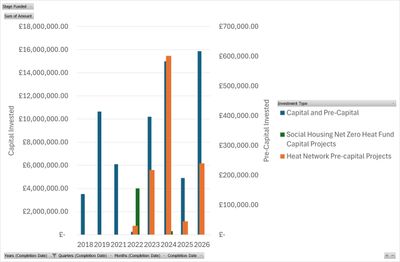
Scotland’s Heat Network Fund (SHNF) was launched in 2022 to offer capital grants to businesses and organisations in the public, private and third sectors to develop heat network projects. It aimed to support the roll-out of zero emission district heat networks and communal heating systems. The latest report on of the Heat Networks Quarterly Report September 2025 indicated total capital deployment of £70.8M through LCITP, SHNF and the Social Housing Net Zero Heat Fund from 2018 to 2026. A further £1.2M supported feasibility studies with a peak in 2024 when around 50% of that funding was spent. SHNF remains open for applications and requires eligible projects to spend their grant by March 2030.
Projects that came forward in this period include:
Torry Heat Network (2023) and Expansion (est. 2026)
AMIDS district heating, Renfrewshire Council
Shared arrays with ground loops supplying heat pumps at the consumer (termed 5th generation) - LAR Housing Trust, Kaimhill Aberdeen, Brandon Road, Ashgill Street, Gallowhill and Glencairn.
Bodyheat - at SWG3 in Glasgow the system captures waste body heat emitted from audiences and stores it in twelve boreholes for later heating and cooling of four large spaces across two buildings.
Predicting the Future
Predictions of how society and the economy will evolve will inevitably be imprecise. However it is reasonable to make observations of recent activity and policy positions that may offer a lens to forecast the future of heat network investment and ownership.
The progress of secondary legislation for heat networks in Scotland has not progressed at the pace it was expected. As a result there has been an inertia from the Local Authorities representing the larger cities in Scotland. Having published Local Heat and Energy Efficiency Strategies the delivery plans have not manifested and received Council approval in the largest cities of Edinburgh and Glasgow yet. Progress continued relatively under the radar in Aberdeen, Fife, Renfrewshire and Stirling.
Many feasibility studies and business cases for projects have been prepared and may come forward including those supported by the Heat Network Support Unit (HNSU) including in:
- Renfrewshire - Paisley Central, Paisley North and AMIDS Extension
- Glasgow - Polmadie
- Edinburgh - Granton Waterfront including connections to Edinburgh College and National Museum of Scotland, Edinburgh Airport Low Carbon Heat Network
- Fife - extensions to Dunfermline, Glenrothes, St Andrews and a new network in Kirkaldy
- Dundee - Baldovie, Caird Park extension and Abertay University and City Centre
- Stirling - University of Stirling
- East Dunbartonshire - Kirkintilloch
- Clackmannanshire - Alloa Forthbank
- South Lanarkshire - Almada Street
- Inverclyde - Greenock River Clyde Homes
- Highland - Elgin Town Centre, Inverness West Bank and Inverness Castle
- Scottish Borders - Tweedbank, The Crichton Trust
- Dumfries and Galloway - Dumfries Town Centre
- Falkirk Council - Callendar Park
- East Renfrewshire Council - Eastwood Park
- Perth and Kinross Council - Perth City Centre Heat Network
- East Lothian Council - East Lothian Heat Highway and Blindwells Heat Network
- West Dunbartonshire Council - Queen’s Quay Extension
Case Studies of Heat Networks
Primary legislation unable to deliver without supporting regulation
The Heat Networks (Scotland) Act received royal assent on March 30th 2021. It required Parliament to pass a suite of secondary legislation to give it the teeth to enforce the principles set out in the Act. In effect, therefore, the Act set a series of targets, largely obligations on Scottish Government and Local Authorities, to put in place the scaffolding to support a market framework for heat networks.
While the devolved government in Scotland had many of the powers it needed, key aspects of regulation were reserved in Westminster. Notably consumer protection and electricity which was the primary fuel to deliver decarbonisation that underpinned the act. In addition there was a clear risk that a divergence of policy and regulation between Westminster and Scotland might create competing markets between Scotland, England and Wales.
It was passed at a time when UK government in Westminster was also considering regulation but Scotland went first and preceded equivalent regulation from Westminster by 4 years. The Heat Networks (Market Framework) (Great Britain) Regulations 2025 had significant similarity to the provisions in the Scotland Act. The mechanics to implement these regulations in secondary legislation was partly implementing customer protections with OfGEM as the regulator and governed by Westminster legislation. Devolved powers over licensing and permitting as well as statutory undertaker rights required Scottish Government to act.
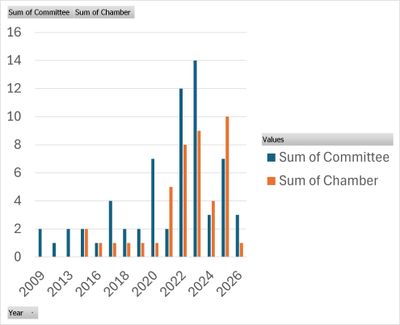
The attention to heat networks in Holyrood Parliament, measured by mentioned in the chamber and committees, reached its peak in 2023 as shown by the illustration to the right. This shows the number of times that "heat network" or "district heat" was stated in Scottish Parliament. They were never mentioned until 2009 around the time of the Climate Change (Scotland) Act. Heat Networks featured infrequently until 2019 and from 2020 the level of attention increased but has subsequently declined in 2024 and 2025. The data shown for 2026 is only for part of the year.
The Act committed Government to pass secondary legislation that set heat networks on a similar footing to other utilities.
The Act also obliged Local Authorities to publish their Local Heat and Energy Efficiency Strategies with a target of March 2022 and supporting guidance was prepared to support their development. This was a quite different from the approach taken in England where a central body within the Department for Energy Security and Net Zero was set up to coordinate a series of Advanced Zoning Pilots (AZP) that were effectively providing the same purpose of identifying priority areas and a delivery model for heat networks.
Aberdeen Heat and Power
A vanguard and exemplar of not-for-profit ownership
With thanks for Michael King for sharing information on the history of Aberdeen Heat and Power.
Aberdeen Heat and Power (AH&P) was established in 2002 and the first heat network in Aberdeen was initiated at Stockethill. This system was completed in 2005 and built to supply 268 homes in four blocks of flats. Two of which were sheltered accommodation.
The growth of heat networks followed and Aberdeen Heat and Power established other islands at Hazelhead (2006), Seaton and the City Centre (2007), Tillydrone (2014), and expansion of Stockethill in 2018-19. As this growth evolved and connected residential properties and Council owned buildings the opportunity emerged to connect commercial customers.
The origins of the company were formed when Janice Lyon was appointed as HECA Officer. Her first major achievement was getting the Council to adopt its Affordable Warmth Strategy in 1999. This was key in that it determined that investment should be targeted at its least thermally efficient properties and that the criteria should be the lowest operational cost for residents. Prior to this, the Councils investment in housing refurbishments was made on the lowest capital cost.
Based on the affordable warmth strategy Janice was rolling out a package of loft insulation, double glazing and gas condensing boilers across their stock. But this package was not suitable for the 59 high rise blocks where the severest fuel poverty was concentrated. She commissioned an options study from White Young Green which identified heat networks with CHP as delivering the lowest cost to users.
Janice Lyon gathered a group of people around her. These included: Mike Scott (her director at Housing Dept); Jean Morrison (CEO of SCARF the fuel poverty advisory charity); Ramsey Milne (at that time Estates Manager at Grampian NHS). These all later became directors of AH&P. Michael King also became involved as he was working with the Combined Heat and Power Association (CHPA) as Manager of the Community Heating Group.
Integrated Utilities (IEU) were engaged as technical advisor since they had designed many of the major heat networks in England (Southampton, Citigen and Nottingham). Another key person at the outset was Charles Smith (sadly deceased) of Brodies LLP who designed the legal structure of AH&P.
Other important people who came on board once the company was established were Ian Booth as CEO from 2009 to 2018 and Tina Buchanan as financial advisor. Tina was instrumental in organising Aberdeen Heat and Power finances. Tina also defined the project development process as well as the Connections Policy.
Professor Jan Webb prepared a case study of the Aberdeen Heat and Power structure (Webb, 2013). In that paper she reflects on the scope for urban actors to shape the transformation of the high carbon energy system in ways that give significance to public goods of social justice, resilience, and mitigation of climate change. Prof Webb was intrigued at how seemingly through serendipity a multi-skilled group had come together to make Aberdeen Heat and Power happen.
Aberdeen Heat and Power were set up as a not-for-profit enterprise, organised as a company limited by guarantee. The Company was established with five members, including elected representatives of the City Council and fuel poverty charity Energy Action Scotland.
Ownership is not held by shareholders and the surpluses generated by the company are not distributed as dividends but reinvested in the business to ensure continued supply of affordable heat and hot water as well as extending networks across Aberdeen.
Aside from the Council the other members were Energy Action Scotland, CHPA and two local tenant association representatives. Eventually the tenant representatives dropped away, as Aberdeen Heat and Power could not enthuse anyone to take their places. So, Jean Morrison and Ramsey Milne became members as a quasi-local representatives.
AH&P adopted a precedent position that full capital costs needed to be covered for Council owned housing projects. If capital had to be borrowed then the finance costs must be recovered from customers and so the heat charge would increase, exacerbating fuel poverty. Full capital for the housing projects came from combination of: Housing Capital Programme - at approximately the same unit cost as low rise housing having electric changed to gas heating. Connection charge to owners for connections. Community Energy Programme (CEP) – Scottish Government grant. Fuel utility grants – EEC, CERT, CESP, ECO. For public buildings CEEF or Spend to Save.
As Aberdeen City Council was a member and, although in a minority, its involvement means the company had to comply with legislation covering procurement and State Aid. This legislation did not affect AH&P’s trading relationship with its own non-domestic properties and residential customers. However, it could be implied that the City Council was providing a form of State Aid in its trading relationship with commercial customers. District Energy Aberdeen Ltd (DEAL) was set up as a wholly-owned subsidiary to channel transactions with non-residential customers other than Aberdeen City Council.
DEAL was established as a for-profit private limited company, with a separate and independent board, and purchased bulk heat from AH&P which it sold on to its own customers. This resolved the State Aid implications. Any financial surpluses DEAL generates were distributed as a dividend to AH&P. This was then used to maintain and extend heat networks to serve additional buildings, both residential and non-residential, across the city.
There were five members of which the Council was one. The Council held their equity stake as 20% - being the threshold for being a Council-influenced company. The board of directors included representation from the members and reserved two seats for councillors and by convention one always held the chair.
Aberdeen City Council specified the buildings to which heat was to be delivered and AH&P agreed to procure, install, operate and maintain systems to facilitate provision of heat. The supply period is to 31st March 2052. AH&P warrants performance and delivery of heat, with plant operated to Good Industrial Practice and Standards. The Council appointed AH&P to develop heat networks and CHP energy centre under a Teckal Exemption. AH&P must abide by public procurement procedures.
The development, design, delivery and operation of the networks was undertaken by AH&P to deliver heat and energy services to Aberdeen City Council housing and their tenants. The works were delivered by contractors and sub-contractors and contracts awarded by AH&P. All licences, consents, permits and permissions including planning and wayleaves are the responsibility of AH&P.
The Torry energy from waste (EfW) plant represents a collaborative investment between Aberdeen City, Aberdeenshire, and Moray Councils, who jointly funded the facility to process municipal waste and generate heat and power. This partnership was established to provide a sustainable waste management solution for the region while also delivering environmental benefits through reduced landfill and lower carbon emissions.
In addition to the EfW plant, Aberdeen City Council has invested in the Torry heat network to distribute the heat produced by the plant to local homes and non-domestic properties. The network, supported by recent Council approvals, is delivered by AH&P to connect 4,500 households along with various public and commercial buildings, thereby addressing fuel poverty and supporting the city’s climate goals.
Aberdeen City Council recently approved a major expansion to the system in Finance and Resources Committee to install a pipe under Aberdeen harbour to connect Torry EfW system to Seaton and up to the hospital. This enables the connection of 4,500 homes as well as various non-domestic properties.

SHETLAND HEAT ENERGY AND POWER (SHEAP)
Lerwick
Shetland Heat Energy and Power (SHEAP) was established in Lerwick in the late 1990s to provide district heating solutions for the town, utilising heat generated from the diesel generator station operated by SSE and the local energy from waste plant. The scheme was developed in response to the need for sustainable energy sources and efficient waste management, linking environmental goals with community benefits.
The network has grown to become a significant asset for Lerwick, comprising extensive insulated pipework that distributes heat to a range of domestic, commercial, and public buildings. Key assets include the central energy centre, the waste-to-energy facility, and a robust infrastructure of underground pipes serving much of the town. SHEAP has been instrumental in reducing reliance on fossil fuels and improving local air quality, positioning Lerwick as a leading example of integrated heat and power provision in Scotland.

City of Edinburgh Council
Early Adopter, Undecided on Future Role for Heat Networks
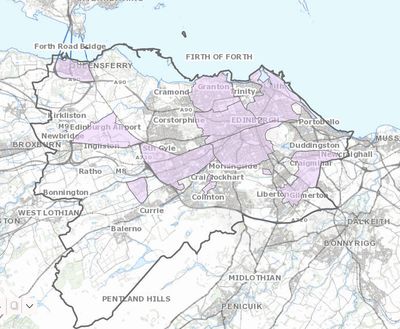
City of Edinburgh Council have operated heat networks since 1950’s. New systems have been added over time. Today the Council continues to own and operate eleven heat networks supplying residential blocks within its housing department. A series of unsuccessful attempts have been made over successive Council administrations to secure a more strategic approach to heat network delivery including incorporating an energy company and seeking to attract investment through a joint venture. These approaches have been accompanied by planned larger scale heat network rollout.
As far back as the early–mid 1980s, the Scottish Campaign to Resist the Atomic Menace (SCRAM) promoted a detailed alternative to nuclear expansion in Scotland. One of their most ambitious proposals was to use waste heat from the coal‑fired Cockenzie Power Station to supply district heating networks in Edinburgh. Although this idea never progressed to construction, it was a serious, publicly‑argued proposal grounded in contemporary European examples of combined heat and power (CHP) and heat networks. SCRAM argued that Cockenzie Power Station (1.2 GW installed capacity) vented enormous quantities of low‑grade heat into the Firth of Forth. This waste heat could be captured using back‑pressure turbines or extraction steam and could be piped to Edinburgh, approximately 10–12 miles away. The system would mirror Scandinavian CHP‑district heating models, which were well‑established by the 1980s.
In 2012 The Scottish Government commissioned AEA to examine whether large fossil‑fuel power stations could supply district heating networks by recovering waste heat. The study covered four sites: Cockenzie, Longannet, Hunterston, and Peterhead. Cockenzie was therefore analysed as a major potential heat source for a district heating network extending into nearby urban areas — including Edinburgh. These were screened for financial viability and connection potential. Cockenzie produced positive results in the modelling, with Internal Rates of Return (IRR) between 1.8% and 2.31% depending on the scenario. Although these IRRs were below the 9% target, the report emphasised that policy support (e.g., capital grants, heat‑obligation mechanisms) could make such schemes viable.
While Cockenzie Power Station was closed in 2013 and demolished by 2015 these reports indicated how city scale heat networks could be achieved. The former site of the power station is now hosting onshore substations for offshore wind farms and brings renewable power ashore. The former seawater cooling system remains a legacy asset that could be integrated into a future water source heat pump solution for the site.
In late 2015 the Council published its Sustainable Energy Action Plan (SEAP). Energy for Edinburgh (ESCO) had been launched earlier in 2015. A series of projects were identified in the SEAP. Energy for Edinburgh was established to develop heat networks; attract investment; and deliver major energy infrastructure projects. This ESCO was expected to be the delivery vehicle for district heating expansion. It is clear in the SEAP that the Council expected significant capital investment in heat networks between 2015 and 2020, with the BioQuarter scheme being the flagship project.
In it the Plan implied that “a number of district heating schemes will have come online” by 2018. This implied that they were in planning or under construction at the time of publication. These were expected to be expanded and interconnected. The Plan forecast heat networks at the Millerhill Residual Waste Facility and a pilot ground source heat pump project. These came forward as Midlothian Energy Limited, and the project led by Midlothian Council, and the pilot GSHP project at Saughton Park, delivered by City of Edinburgh Council in partnership with Greenspace Scotland. This was not a heat network, but considered as a future heat source for decentralised systems.
The Plan identified the BioQuarter and Fountainbridge District Heating Schemes as major new district heating projects, however these have not come forward. Construction and commissioning was predicted by 2020. The Plan also forecast investment in new district heating networks across the city, especially in areas of new development, and expansion of existing networks to create a more connected system. Use of the Edinburgh District Heating Strategy and Heat Map (published 2015) to guide investment.
The Council declared a Climate Emergency in 2018. Following the Heat Networks (Scotland) Act in 2021 the Council developed and published its LHEES with extensive zones for heat networks. It considered a proposed minority joint venture delivery model but that was not accepted at the Policy and Sustainability Committee in 2025 and so is still considering its options.
The Council adopted City Plan 2030 in November 2024 and it positions heat networks as critical low‑carbon infrastructure required to meet Edinburgh’s climate goals. It explicitly states that the development of heat networks and energy infrastructure is prioritised to support the transition to a low‑carbon economy. City Plan 2030 requires: New buildings to incorporate low‑carbon heat solutions; developments in identified areas to connect to existing or planned heat networks; and where connection is not yet possible, developments must be heat‑network ready (i.e., designed for future connection).
City of Edinburgh Council is responsible for the operation of heat networks at 11 housing sites. The Council purchases energy from the energy market using corporate frameworks. Energy centres turn this energy into heat, which is then supplied to homes. The 11 sites provide heat to 1,262 homes; 1,099 are Council owned homes and 163 homes are privately owned (City of Edinburgh Council, 2026).
Four sites have historic ageing gas boilers, which were installed in the 1950-60s. The sites include 190 homes, including 101 private homes at Maidencraig and Westfield Court. The Council is the minority owner at these blocks. Two sites at Ferniehill/ Drum Avenue and Saughton Mains are sheltered housing complexes.
Two sites have retrofitted gas boiler heat networks, which were installed between 2011-12. The two sites include 384 homes, of which six are privately owned. Cables Wynd House is a communal heating system that recently received planning permission for a major upgrade to the fabric and heating systems including replacement of the heat network with electric night storage heating.
The district heating scheme serving Greendykes House and Wauchope House in Craigmillar, Edinburgh, was commissioned in 2012 as part of a wider regeneration initiative aimed at improving energy efficiency and reducing fuel poverty in the area. The scheme utilises a central energy centre comprising gas boilers and solar thermal panels located within the neighbourhood. The energy centre distributes heat via insulated pipework to two residential tower blocks. The project was delivered by Easy Heat Solutions and involved installing new heat network pipes up the risers and lateral service pipes connecting each flat. The residential flats all had a deep retrofit to replace electric storage heaters with a wet heating system and a heat interface unit fitted in each property. An important learning from the project was the significant resident engagement and decanting to undertake the intrusive works that were organised and completed in a short period of time and, anecdotally, with relatively little objection.
Five sites were completed as part of the Council’s newbuild housing programme and were completed between 2014-2025. This includes 688 homes, of which 56 are private owners. All systems are communal heating systems and are mix of Combines Heat and Power (CHP) and Air Source Heat Pumps. This includes: Greendykes C, Greendykes G, West Pilton Crescent, Western Villages and Granton Plot D1.
The Council also own a number of residential blocks of flats that are heated with storage heating systems. A number of these, including some of the blocks at Moredun and Muirhouse, have had external wall insulation replaced with new storage heating systems.
University of Edinburgh
Advancing Innovative Low-Carbon Campus Energy
The University of Edinburgh have invested in, and operate, several district heat and cooling networks across its campuses, each designed to improve energy efficiency, reduce carbon emissions, and supply reliable heating to a range of academic and residential buildings. In 1996 The University incorporated a 100% owned subsidiary company, UoE Estates Services Company Ltd, to deliver estates services including the installation and operation of Combined Heat and Power energy centres at various premises of the University. Strategically, the ESCo assists the University to pursue its goal of sustainable and efficient use of energy.
The Pollock Halls heat network was the earliest network, established to provide heating for the university’s main student accommodation complex. The energy centre originally contained gas-fired boilers and in 2003 a CHP engine was added to provide a combined capacity of 8 MW and includes a thermal store of 80 m3. The system supplies heat to 12 residential buildings, as well as communal areas and catering facilities, ensuring a reliable and efficient heat supply for over 2,000 students.
The George Square heat and cooling network was constructed in 2005-6 to serve the University’s central campus area. The energy centre utilises combined heat and power gas engines and gas-fired boilers with a combined thermal capacity of approximately 10 MW. The energy centre also hosts an absorption chiller that supplies cooling to many of the buildings in dedicated flow and return pipework. The system includes a thermal storage tank with a capacity of 100 m3 to optimise operational efficiency and accommodate peak loads. The network supplies heat to over 20 academic buildings, including libraries, lecture halls, and administrative offices.
Constructed in 2014, the Holyrood heat network serves the university’s postgraduate accommodation and academic buildings in the Holyrood area. The network’s energy centre utilises gas boilers with a total capacity of 6 MW, supported by a 60 m3 thermal storage tank. Heat is distributed to five residential blocks, seminar rooms, a sports facility, and offices, with the network designed to support future expansion and integration of renewable generation technologies.
Commissioned in 2015, the Kings Buildings heat network was converted from its original steam distribution to low temperature hot water. It supplies the University’s main science and engineering campus. The energy centre comprises a mix of gas-fired CHP units and high-efficiency boilers, delivering a total installed capacity of 12 MW. A 150 m3 thermal storage facility enables load shifting and enhances system resilience. Notably, the network incorporates a recent direct connection to the campus data centre, allowing waste heat recovery and further improving overall energy efficiency. The network serves research laboratories, teaching spaces, and offices.
The Easter Bush heat network, commissioned in 2017, is dedicated to the university’s veterinary and agricultural campus in Midlothian. The energy centre also employs biomass boilers, providing a renewable heat supply with a capacity of 4 MW. A 50 m3thermal storage tank ensures flexibility and supports the energy demands of the site. The network supplies heat to four academic buildings, laboratories, and student accommodation, marking a significant investment in sustainable energy infrastructure.
The University of Edinburgh’s heat networks demonstrate an institution’s evolution towards a comprehensive approach to low-carbon, resilient heating provision. The consistent deployment of a technology has resulted in the University building expertise in the operation and optimisation of these systems. Notable innovations include the recent integration of waste heat recovery from the Kings Buildings data centre.

Dundee University Campus Heat Network
Incorporation of a University owned Utility Company
Dundee University Utility Supply Company Limited (DUUSCo) was incorporated on 14 May 1990 as a wholly owned subsidiary of the University of Dundee. Its creation followed decades of campus expansion and rising energy demand. The University’s district heating network dates back to 1962, supplying heat and hot water across a growing 42‑hectare campus. By the mid‑1980s, electricity demand—especially from research laboratories—had increased sharply, prompting the University to explore ways to reduce energy costs and improve efficiency.
Initial feasibility studies in 1988 identified CHP as a viable solution, but financial constraints delayed progress. Falling gas prices, lower interest rates, and rising electricity costs in the mid‑1990s revived the project, leading to the decision to proceed with a major CHP installation. The project installed 3 MW of combined heat and power (CHP) engines, designed to generate electricity while capturing waste heat for the district heating network. DUUSCO adopted a multi‑engine setup, instead of a single engine, to improve operational flexibility, efficiency, and serviceability. Two 30,000‑gallon oil tanks were removed to create the required 160 m² of floor space for the new engines.
DUUSCO operates as a publicly owned utility provider for the University, responsible for:
- producing electricity for campus use; managing the district heating network, ensuring reliable supply of heat and hot water;
- optimising energy costs by generating electricity on‑site rather than relying solely on external suppliers;
- supporting energy‑intensive research facilities, which require stable, high‑capacity energy provision; and
- complying with public‑sector transparency requirements.
DUUSCO’s operational model allows the University to control energy pricing more effectively by influencing unit cost, rather than attempting to limit consumption—an approach identified as essential as early as 1985.

FIFE - ST ANDREWS UNIVERSITY
A flagship brownfield regeneration and energy project
The St Andrews heat network, linking the Guardbridge Energy Centre to the University’s North Haugh campus, is a major low‑carbon district heating scheme developed to support the University of St Andrews’ ambition to become the UK’s first carbon‑neutral university. It centres on the conversion of the former Guardbridge Paper Mill into a modern energy centre and the installation of a 10.6 km heat network supplying more than 35 buildings on the North Haugh.
The University acquired the disused Guardbridge Paper Mill in 2010, initiating plans to transform the site into a renewable‑energy hub. Construction of the biomass‑fuelled energy centre and district heating network was commissioned in 2016.
At the heart of the system is a 6.5 MW biomass boiler, housed within one of the former buildings on the site. The plant pumps hot water through a 10.6 km insulated district heating network that crosses varied terrain—including the Swilken Burn—before reaching the University’s North Haugh campus. The network currently supplies 35 buildings, including teaching, research, and administrative facilities. The system is designed to reduce carbon emissions by an estimated 6,000 tCO₂ per year.
The total project cost is reported at £25 million. Funding included significant investment by the University of St Andrews. This was supported by £11m from Scottish Partnership for Regeneration in Urban Centres (SPRUCE) fund to deliver the project to regenerate 36 acres of a former paper mill, and create a Low Carbon Innovation Centre, linking to St Andrews University buildings at North Haugh. The University also secured a £10m grant from the Scottish Funding Council’s (SFC) Carbon Reduction Programme.
The heat network and energy centre are owned and operated by the University of St Andrews, which acts as the project client and long‑term steward of the system. The University’s objectives include carbon reduction, energy‑cost stability, and the creation of an educational resource—reflected in the design brief requiring the plant to be accessible for school groups, researchers, and industry visitors. The redevelopment of the Guardbridge site also forms part of a wider economic‑regeneration strategy for the area.
The Guardbridge–North Haugh network has been designed with future‑proofing and expansion capacity, including spare pipework capacity and space for additional plant. Project documentation highlights the intention to support further development across the University estate and the wider Guardbridge regeneration zone. The University are using the Guardbridge campus for further energy research that may integrate with the energy centre and network.
At the regional level, Fife Council’s Local Heat and Energy Efficiency Strategy (LHEES) identifies district heating as a key component of the area’s decarbonisation pathway. The Guardbridge scheme is recognised as a major anchor project that has the potential to expand into the town of St Andrews as well as towards RAF Leuchars.

BODYHEAT AT SWG3
Borehole Thermal Energy Storage at a Music Venue
SWG3 is an arts and events venue in Glasgow with a 5th generation geothermal district heating and cooling network operating since 2022. The BODYHEAT system, funded by LCITP & District Heating Loan Fund, captures waste body heat emitted from audiences and stores it in twelve boreholes for later use, supplying low carbon heating and cooling to four large spaces across two buildings.
The project was developed by Town Rock Energy with technical advisors Harley Haddow.
